

Bitcoin Plunges 8% Below Support Level as Global Liquidation Triggers

When a price breaks down through a key support level, the pressure builds up quickly and causes forced liquidations, margin calls and cascading effects to occur in both the futures and spot markets at the same time.
What triggered the move
Liquidation cascade is currently driving the momentum for bitcoin’s downward price trend. When too many traders take on the same side of a market, support breaks) and causes automatic liquidations which creates more selling pressure that allows prices to drop much lower than where they were previously. This kind of setup is exactly what puts crypto markets in a vulnerable state when there’s extreme sentiment and too many leveraged traders clustered around the same price points.
We’ve already seen rapid progression of this phenomenon via recent market reports. Leading up to previous sell-offs, as billions of dollars worth of positions (predominantly long trades) were liquidated after major sell-offs in Bitcoin, there were also ETF outflows, putting additional downward pressure on top of leveraged liquidations. Therefore, the reason for the downtrend has been due to a combination of leverage, liquidity, and confidence, not by only one factor.
Why support levels matter so much
Support isn't merely a line on a chart for traders. It's a threshold where there were historically enough buyers to slow the descent of the stock price. Once the level breaks down, the market usually has to establish a new bottom, and the transition can appear sudden depending on when stop-losses and liquidation orders trigger.
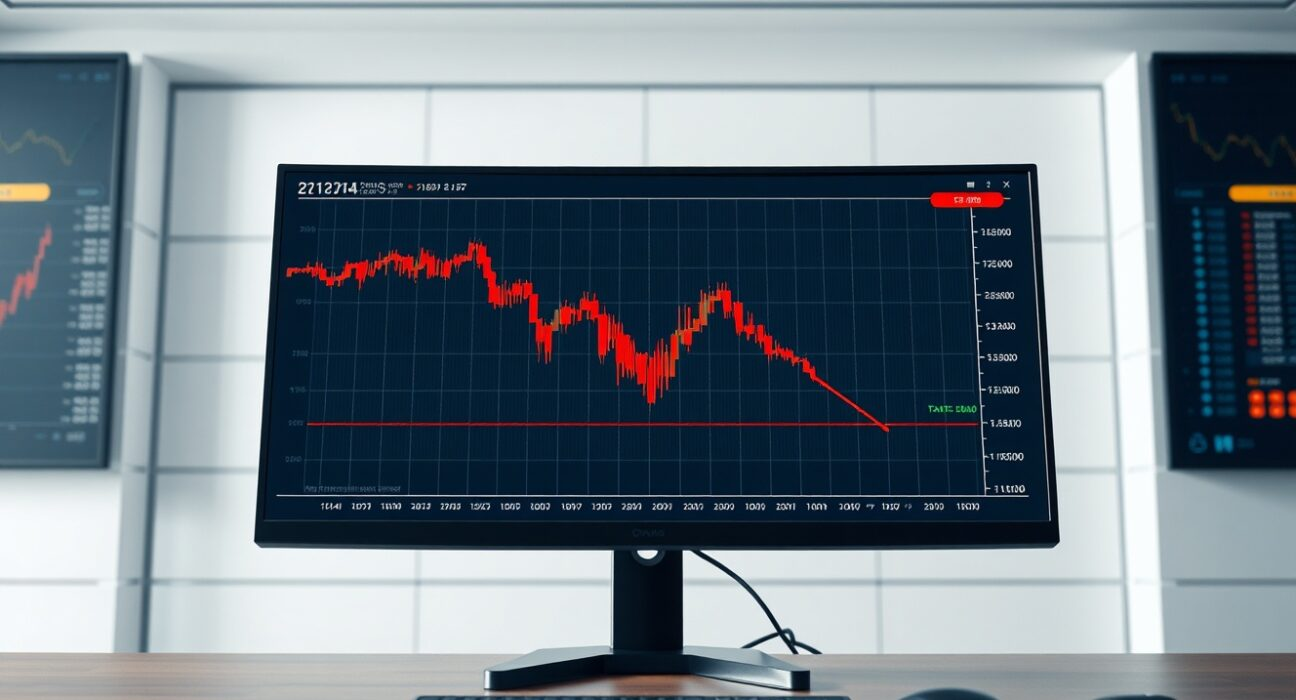
This is exactly why technical levels turn into psychological levels for traders as well. When Bitcoin moves below one of these psychological thresholds, it causes traders waiting for confirmation to back out, adding additional pressure to the already large amount of selling that has occurred and creating an illusion that the stock price has dropped further than the initial "trigger."
The role of leverage
Liquidation of cryptocurrency positions is what really drives these price movements. Leveraging is a double-edged sword - it doubles both the gains and the losses on leveraged investments. If a large price movement occurs against your position, the exchange will automatically close your position to limit potential losses. This forced exit represents an opportunity to sell without conviction and is why liquidation waves can become unpredictable and generate extreme volatility.
Bitcoin is an especially apt embodiment of this phenomenon due to how fragmented the market structure is (and/or how much retail trading occurs off-shore), making it susceptible to the often significant influences of off-shore derivative markets. In scenarios where many leveraged traders are clustered around a common level, a single break can turn what should have been just a clean 'break' into a series of larger transactions as traders work to unwind their positions all at once.
What this means for businesses and investors
For retail investors, when there is a significant drop in the price of Bitcoin, it serves as a test for how much risk they will take on. For businesses that either have Bitcoin on their balance sheets or utilize it as one part of their overall strategy towards digital assets, it is both an issue relating to the business’s balance sheets as well as a sentiment issue.
Because the price of Bitcoin can change quickly (8% in a matter of hours), this may not seem dramatic to investors in traditional markets but could certainly change how funding conditions exist, how much BTC collateral is worth, and how investors feel about the ongoing volatility.

Additionally, for companies responding to Bitcoin price volatility, it is also a macro signal as to what will happen next. In many instances, when traders experience liquidity cascades, it is often a sign that too many traders were overly confident and crowded in one direction. This can create negative sentiment toward other risk assets. Likewise, when Bitcoin is experiencing large price moves, they often coincide with a slow down in ETF flows, increases in yields, and a general ‘risk-off’ feeling.
What traders are watching next
Currently the leading question in our minds revolves around whether or not Bitcoin (BTC) has the ability to continue to hold support and stabilize at this current support level, or whether the selling off of funds will create new liquidating cycles (forcibly liquidating) similar to previous occurrences. A prime example of such occurred previously where a majority of traders were watching the technical level of $60,000 for indications as to where assets might begin to be liquidated or liquidations stopped; therefore providing an augmenting basis for price guidance at this level.
Should the Bitcoin market not recover very soon, the next sequence of events to happen is less due to panic and rather positioning. A trader will decrease their leverage, an institution will wait for confirmation prior to committing capital, and the market will have time to re-build the confidence to trigger a new trend. Although this type of reset can be very chaotic in nature, it is how the crypto markets typically revert back to a balanced state after an extended period of exploitation.
One of the larger takeaways from this is the realization that in the crypto market, a break in support seldom simply signals a chart event. A break in support frequently marks the time when an unwinding is about to begin. Once liquidations from the global market start happening, the crypto market has a great deal of momentum behind it, and therefore will react more quickly than traders can respond to on any given news item.
Latest Posts