

Andrs Baka Takes Office as Hungarian President
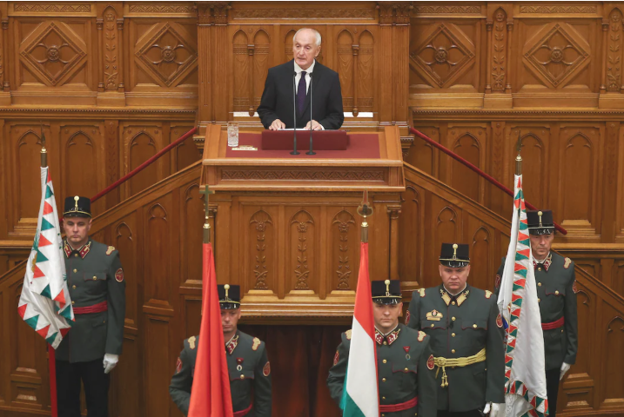
With an uncontested win in the elections, a bold and powerful tone at the inaugural speech and a clearly committed plan to rebuild broken relationships with internal allies, the Presidency is bound to revolutionize the faith of Hungary for the upcoming years!
Table of Contents
1. Who Is András Baka
2. How He Was Elected
3. Why the Election Happened Now
4. What He Said in His Inaugural Address
5. What the Hungarian Presidency Actually Does
6. The Political Context
7. Timeline
8. Conclusion
Who Is András Baka
András Baka, 73, is a former chief justice of Hungary's Supreme Court, with a stronger background in the judiciary as compared to day-to-day party politics, something that makes him a clear notable upgrade from the previous presidents. András was nominated and elected for the presidency by Tisza, the governing party led by Prime Minister Péter Magyar.
How He Was Elected
Hungary's parliament held a secret ballot on August 11, 2026 which led to the appointment of András Baka as the president. András was also notably the sole candidate on the ballot and received 140 votes in favor of his appointment, while the opposition Fidesz party and the Christian Democrats (KDNP) denied participation for the voting process. As per Hungarian laws, Tisza, or the winning party requires a holding of two-thirds of parliamentary majority for the election of a president without opposition support, the main reason for the election being a single- candidate vote.
Why the Election Happened Now
Baka’s appointment to the Presidency not only marks his appointment but also a constitutional change for Hungary. The previous president, Tamás Sulyok’s term as the president concluded at midnight on July 20,2026 according to the 17th amendment to Hungary’s Fundamental Law. Following this, the presidency powers and responsibilities were temporarily held by the Speaker of the National Assembly, Ágnes Forsthoffer until the formal elections in the parliament on August 11 and the official appointment followed by taking office on 20th July 2026.
And according to the 17th Amendment, Baka’s term stands different from the standard five-year presidential term, it stays in effect until a new constitution comes into force, but not extending over a period of five years. Thus, meaning that Baka’s presidency is tied along a broader constitutional process that continues developing in Hungary.
What He Said in His Inaugural Address
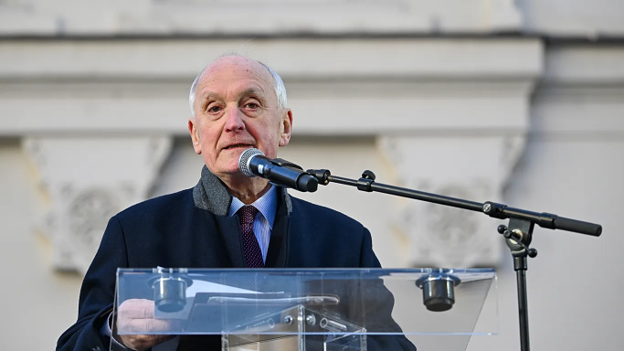
During his Inaugural Address, Baka was direct while addressing the political era under the previous presidency, under former Prime Minister Viktor Orbán's government, being such where one party had captured the state and there had been no functioning system of checks and balances between branches of power. The address also involved insights about his own plans for the role in the near future, where he claimed that Hungary’s future would require both justice as well as restraint, and reassuring spectators that his presidency would represent citizens across differing political views. Baka also took a moment to lay focus on his plans of rebuilding Hungary's relationships with international allies, something that had notably deteriorated in the recent years for Hungary.
What the Hungarian Presidency Actually Does
The Hungarian presidency is largely a ceremonial role instead of an executive one since the Hungarian Prime Minister and the Parliament hold major governing power within the country. The President’s office executes constitutional control and decisions with the president being responsible for signing legislation into law, being responsible for veto bills or referring them to the Constitutional Court for review while also representing the Hungarian state on domestic and international levels and serving as the commander-in-chief of the armed forces. And while the roles may not involve day-to-day power or involvement, it holds deep and genuine institutional weight, mainly in the period of constitutional transition that Hungary is currently going through.
The Political Context
Baka’s election doesn’t simply mark a change or development in the future of Hungary but also a significant shift within the Hungarian politics and parliament. Prime Minister Péter Magyar's Tisza party swept two-thirds of the parliamentary majority, enabling Baka to win election while being uncontested. This change has been described by international coverage channels as a shift of the Hungarian institutes moving away from the political structures that influenced its policies under Orbán's tenure. The Prime Minister Magyar was quick to congratulate the new president, wishing Baka good health along with requesting "as much humanity as possible" while performing his duties through a Facebook post.
On the other hand, the opposition parties, mainly Fidesz and the KDNP’s choice of not joining parliamentary vote has raised suspicion and criticism towards Baka from his opposition figures in the days leading up to his taking office. A criticism and commentary that many find surprising considering the ceremonial nature and gravity of the role Baka is taking up for the foreseeable future within Hungarian politics.
Timeline
|
Date |
Event |
|
July 20, 2026 |
Tamás Sulyok's presidential term expires under the 17th constitutional amendment |
|
July 20 – Aug 11, 2026 |
Presidential powers temporarily held by Speaker Ágnes Forsthoffer |
|
Aug 11, 2026 |
Parliament elects András Baka president, 140 votes, sole candidate |
|
Aug 19, 2026 |
Baka formally takes office |
Conclusion
András Baka's move from the courtroom to Sándor Palace marks the completion of a month-long transition which began from a constitutional deadline and amendment and concluded with a symbolic and historic uncontested vote. Whether Baka’s presidency is able to deliver on the restrained, bridge-building role that he claimed or it becomes a flashpoint or noteworthy event in Hungary’s political realignment is something to watch out for in the coming months!
Latest Posts