

Ai Skin Imaging Detects Heart Diseases
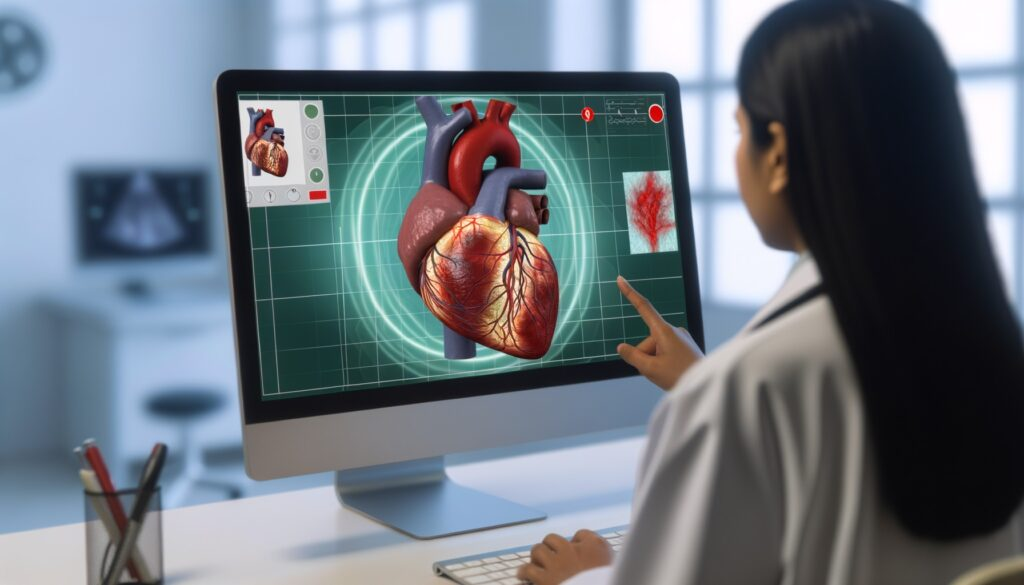
Because of the increasing insurance premiums and longer wait for complex and expensive procedures, health care providers have experienced a negative impact on their finances. Fast-RSOM presents a more efficient approach to the early detection of heart disease. In this article we will provide an overview of how fast-RSOM functions; the benefits of this technology, and the opportunities for businesses to capitalize on this new and disruptive health technology.
How Fast-RSOM Unlocks Hidden Signals
The Fast-RSOM (Raster Scan Optoacoustic Mesoscopy) method, which was developed by researchers from the Helmholtz Munich center, uses light pulses to create ultrasound waves, creating three-dimensional representations of very small blood vessels and their oxygen flow and movement beneath the surface of the skin. It helps detect microvascular endothelial dysfunction (MiVED), which refers to an inability of the body to dilate small blood vessels, an important indicator of risk for heart disease and an invisible condition that could not be detected using conventional means such as ultrasound or CT scans.
According to Professor Vasilis Ntziachristos, this development represents a significant advance in the ability to detect and treat heart disease at an earlier stage. The fast-RSOM approach will enable scans to be done with minimal equipment and within minutes without needles or invasive procedures. The preliminary findings from pilot studies also indicate that it is being used to detect changes in the vascular tone of the body, which may help guide the treatment of patients with hypertension by initiating medications such as statins earlier and potentially identifying silent threats during routine visits.

Proven Accuracy: Data Speaks Volumes
Fast-RSOM is faster than traditional methods. Facial thermal imaging + AI accurately predicts coronary artery disease with an additional 13% accuracy than Clinical Risk Scores (the ≥90% range for >460 study subjects) through the use of AI aided by facial thermal imaging. Scleral Photo AI achieved 89% accuracy on the prediction of coronary heart disease based on vascular features. The number of deaths per year, due to heart diseases accounts for more than 15 million, out of which 40% would have been prevented if there was an early recognition through changes in lifestyle. The biomarkers generated by Fast-RSOM allow for an individualized approach to monitoring patients now and the associated savings will help reduce the $1T price tag that CVD places on the international economy.
A Business Edge for Clinics and Investors
Due to the advancement in artificial intelligence,the valuations of the healthtech companies have gone up. This can, furthermore, improve the diagnostic accuracy of the diseases. Such as Butterfly Network's ultrasound AIs currently valued at $1.5 billion when it comes to their market capitalization. Fast-RSOM can also be well aligned with telehealth as it will allow patients to send pictures of their forearm when they use the app to scan themselves, and then AI will use the pictures to calculate each person’s risk score based on their results.
The benefits of using Fast-RSOM in the diagnostic and health imaging markets directly translate to savings for both clinics and health plans since they won’t need to order additional EKGs and/or MRIs ($500+) because they’ll be getting the information they need from just one device.
Opportunities:
- Preventive diagnostics (market cap: $45 billion)—fast and inexpensive screenings for cardiovascular disease with little-to-no invasiveness.
- AI health imaging (market cap: $20 billion)—providing users with the ability to view their cardiovascular status at any time, without having to leave their home.
- Heart Disease Management (market cap: $700 billion)—providing users with better information now through early intervention would provide them with a better return on investment in prevention.
The portable size of the Fast-RSOM device is perfect for those who work or live in developing nations specifically, India, which has approximately 60 million diabetics. A potential partnership between Fast-RSOM with other devices, such as the Apple Health app, would provide a bundled offering that would allow users the ability to scan themselves.
Challenges Ahead to Scale
The biggest challenge for Faster-Scan will be finding larger, diverse validation study cohorts. The majority of the current validation studies have been conducted in European countries. The FDA and CE Mark approvals will need to be completed prior to launching commercially, as they will require training of clinician providers and users of how to interpret the data and perform any required actions for the patient. Privacy is another challenge to maintain; if skin data (which can be used as biometrics) is collected via this device, it must comply with GDPR regulations.
Costs of prototyping are estimated at $50,000, but with scaling, costs are expected to drop to approximately $5.00 per unit, undercutting traditional portable devices and enabling easier access for consumers already using cell phones. Reimbursement continues to be an obstacle, however, reimbursement is now being encouraged by the Centers for Medicare and Medicaid Services through pilot programs that provide reimbursement based on achieving positive outcomes through cardiovascular efforts.
Path to Widespread Adoption
Helmholtz aims to roll out a wider distribution model for its AI-enhanced image processing software by 2028. The company plans to partner with pharmaceutical companies in order to create clinical trial endpoints for its work. To this end, Helmholtz will combine its fast-RSOM technology with wearable devices as part of the patient's treatment plan. In addition, Helmholtz has approached several technology startups to license their algorithms for use with dermoscopes.
For business executives, investing in the fast-RSOM technology is an opportunity to significantly increase returns on investment (ROI) by reducing the number of readmissions to hospitals (20% of all heart disease cases) and improving patient retention rates. For investors, the potential for this technology is substantial due to the fact that preventive AI technologies produce a return on investment that is 3-5 times greater than comparable technologies.
Implication for the Healthcare Economy of Tomorrow
By flipping the traditional model of reactive healthcare to a proactive model, fast-RSOM will help alleviate the burdens placed on current healthcare systems. Patients will be able to avoid medical emergencies and businesses will benefit from improved data-driven efficiencies. In addition, the increased focus on simplicity in the post-pandemic world will lead to an increase in opportunities for the application of this technology in the wellness space.
Keep an eye on Helmholtz; it is quite possible that the next demonstration of their technology will dramatically impact your portfolio. Heart Health will never be the same again!
Latest Posts