

AI Integration in Education UNESCO Guidelines For Ethical AI Deployments in Classrooms
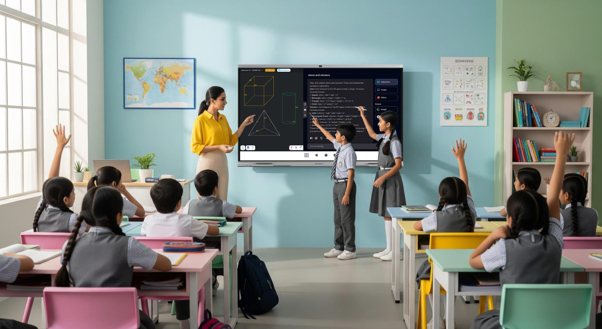
Whether you consider the way students make or manage notes today, how the teachers develop quizzes in minutes instead of hours or simply how the two interact within a classroom, AI has truly revolutionized the way we study. However, what has not changed is our struggle with developing clear, firm guidelines of AI usage - something that UNESCO has attempted to define and change over the years!
UNESCO’s Guidelines for Ethical AI Deployments isn’t simply just a framework or a set of rules that schools are expected to adhere to, it’s a constantly updated growing body of work that provides insights about the ethical usage and inclusion of AI while also highlighting the strategies and measures that students, educators as well as parents need to look out for!
Table of Contents
- Why is UNESCO Drafting AI Guidelines?
- The Development of UNESCO’s AI Guidelines
- Latest Development By UNESCO
- What’s Still Missing In The Guidelines
- Implementation Guide for Schools and Teachers
- Conclusion
Why is UNESCO Drafting AI Guidelines?
A Research by UNESCO themselves, surveying over 450 schools and universities showcased that fewer than 10% institutions globally had actually created or followed a formal institutional policy on generative AI Use. And that’s quite an alarming concern - an entire generation of students having no definitive idea of how to utilize the abundance of technology at their fingertips, not knowing what’s right or wrong to share or utilize and what quality of work is acceptable as AI-assisted or self-performed.
UNESCO has clearly defined this problem as not really as technical as it is governmental - The Invasion and Blending of Generative AI tools into our education systems or use amongst students cannot be contained or aligned with the level of teacher training or systemic provisions that need to be implemented and hence, Development of a definitive guideline outlining the conscious and ethical use of AI in classrooms, is truly essential.
The Development of UNESCO’s AI Guideline
|
Document |
Year |
Core Focus |
Headline Recommendation |
|
Recommendation on the Ethics of AI |
2021 |
Global ethical foundation |
Human oversight and dignity as non-negotiable principles |
|
Guidance for GenAI in Education and Research |
2023 |
Regulating generative AI tools specifically |
Minimum age of 13; mandatory data privacy protections |
|
AI Competency Frameworks (Students & Teachers) |
2024 |
Practical AI literacy |
Defined skills and understanding for each role |
|
Classroom-ready ethical guidelines (academic) |
2026 |
Operationalizing principles |
66 role- and phase-specific action rules |
Latest Development By UNESCO
A recent 2026 study by academic researchers, enabled UNESCO to further utilize its broader ethical principles into 66 classroom-ready guidelines - finely segregated for both teachers as well as students, while also streamlining the process of integration into categories of before, during and after AI use! Right from being a broad principle, to a brief policy outline and into a detailed checklist and guide that a teacher could compare against and follow on a regular basis, there’s truly no hurdle left - but Integration and Implementation in every educational institute around the world!
What’s Still Missing In The Guidelines
While the 2026 Guidelines might’ve provided a detailed application strategy for what needs to be done, it’s only limited to being a document of measures and strategies. Until 2023, only seven countries (China, Finland, Georgia, Qatar, Spain, Thailand, and Türkiye) out of the 194 members of UNESCO had developed or were developing formal teacher training frameworks on AI, underlining that it’s not simply a policy what countries and institutions lack, but the problem runs far deeper.
Another common critique of these guidelines lies in the idea that these guidelines attempt to compensate for structural deficits or systemic shortcomings such as unequal access to technology or varying levels of technology literacy with AI’s Quality and Competency, in what is commonly known as techno-solutionism. Perhaps even works in the favour of the companies that develop these tools, further newer questions about AI development and Integration rather than mere adoption and implementation.
Implementation Guide For Schools and Teachers
If you’re an educator, an institution or simply a teacher reading this and thinking about the first steps to assure alignment with UNESCO’s guidelines, it’s actually quite simple and achievable:
1. Begin by defining and enforcing a minimum age for Independent use of AI tools in classrooms as well as personal work of the students.
2. Evaluate the tools being developed or used by your institution, check for the data it collects, how it manages and who’s to gain or lose from and ensure to communicate it clearly in writing to all individuals involved in the process.
3. Ensure to invest in teacher training, don’t simply allow them to familiarize themselves but provide necessary assistance to thoroughly understand and integrate Generative AI for greater classroom and teaching experiences.
4. Regularly assess and monitor the usage of Generative AI tools, while also being vigilant about its output, dependency as well as familiarity with the teachers and students, ensuring it serves everyone adequately.
And the best part? You don’t even need to await national or governmental legislation when you follow these guidelines! If you truly wish to get ahead in the race of AI Integration and enhance the quality of education and futureproof training for your student, the time to upskill and integrate AI has truly arrived!
Conclusion
Throughout the years right from 2021 to 2026, UNESCO has focused on AI in education shifting from a broad ethical statement to detailed, classroom-tailored recommendations covering the horizons of age limits, data privacy standards as well as teacher training requirements and newer competency frameworks and checklists. Yet, what has lacked is the ground-level implementation within Schools as a large majority still operate without blending AI or developing AI policies at all! And if you think of it, UNESCO has completely fulfilled their role and provided educational institutes with everything that they could require, but where it has struggled is ensuring that these institutions actually follow these guidelines!
Latest Posts