

A House Divided Vance Presses the Fed to Cut Rates While Its Own Chair Leans Toward a Hike
This week, the Washington House and the Federal Reserve gave the world a live demonstration of what that quote really stands for, as the House pushed towards lower interest rates while the Fed’s own chair has spent the past few days hinting he might be on the path of raising them again.
Table of Contents
1. What Vance Actually Said
2. Why This Landed the Way It Did
3. The Fed's Own House Is Divided Too
4. Vance's Remarks vs. Warsh's Jackson Hole Signal
5. Why the Administration Wants Rates Down
6. The Independence Question Nobody's Avoiding
7. What Happens at the September Meeting
8. Conclusion
What Vance Actually Said
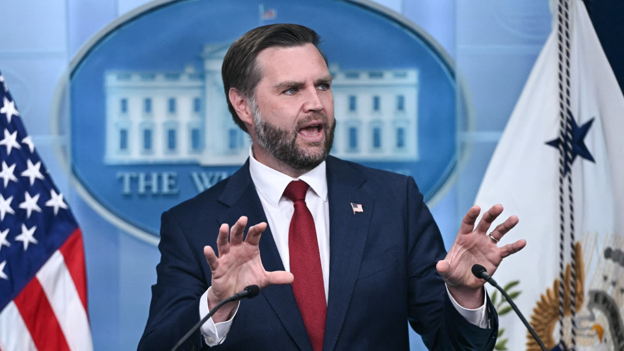
During his White House press briefing on Thursday, September 3 Vice President JD Vance was questioned by CNBC’s Eamon Javers with regards to the Trump administration’s views on the volatile movements of the US Bond markets and he responded in a direct, firm approach by stating “We believe that the Fed should be lowering interest rates,” while also labelling the move as the “proper and responsible” response to the latest US Inflation rates data.
While referencing President Trump, Vance said “One of the main reasons he cares a lot about interest rates is because he wants Americans to be able to afford a home. When interest rates go higher, that means that borrowing costs are higher”, while framing the need for lowering rates as a compelling requirement rather than a purely technical move. He further completed his stance by what’s being interpreted as both an appeal as well as an indirect pressure strategy while claiming, “We are doing a lot of things to try to keep those interest rates down, but it would be nice to have some help from the Federal Reserve”, a statement that could have a significant impact on the outcome of the next interest rates.
Why This Landed the Way It Did
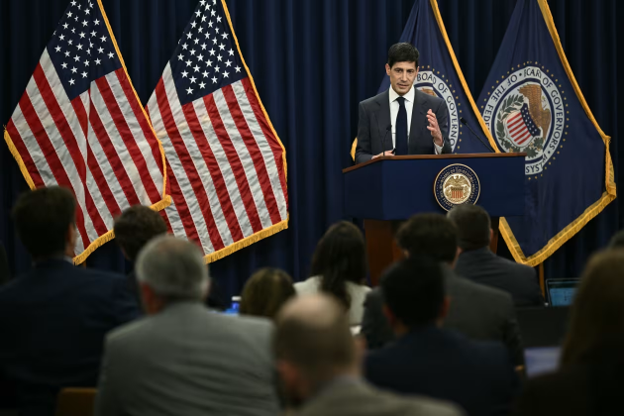
What makes Vance’s comment so significant is their timing. Vance’s statement arrives during a period of subtly developing tension and standoff between the White House and the Fed. Just days earlier, Fed Chair Kevin Warsh during his Jackson Hole Economic Symposium addressal maintained a hawkish tone while emphasizing on inflation continuing to remain high and declining the idea of lowering interest rates in the near future. What’s more important is Kevin Warsh was Trump’s own handpicked candidate for the role, making Vance’s comment less of a policy opinion and more of a direct rebuttal and direction for the Fed Chair that the administration has appointed.
And these comments create an unusual situation amidst the Trump administration. Warsh’s predecessor was also reported aggressively pushed by the President to cut rates throughout his first term in the office, and that very pressure continues persistently till now, and if JD Vance’s statement are to be weighed upon, has only further intensified.
The Fed's Own House Is Divided Too
For the Americans, these events unfolding are more unsettling in particular because it doesn’t simply mark disagreement within the White House and the Feds, but reports of growing tensions within the Feds are making the rounds as well. In the same week as Vance’s comments, Fed Governor Micheal Barr claimed that he’d be supportive of a rate increase if inflation levels maintained their high rates while fellow Governor Christopher Waller on Thursday morning claimed that he’d rather look to maintain the rates if not decrease them. And while this could be considered as simple as three individual opinions or approaches to the matter, the three figure’s influence over the actual outcome remains a space of genuine concern, especially with a handful of days left until the interest rate announcements.
Vance's Remarks vs. Warsh's Jackson Hole Signal
|
Vance (White House) |
Warsh (Fed Chair) |
|
|
Position |
Lower rates |
Open to raising rates |
|
Stated reasoning |
Housing affordability, borrowing costs |
Persistently high inflation |
|
Venue |
White House press briefing, Sept. 3 |
Jackson Hole Symposium, Aug. 28 |
|
Tone |
Direct, "proper and responsible" framing |
Hawkish, no explicit forward guidance |
|
Market reading |
Adds to pressure for a cut |
Pushed rate-hike odds sharply higher |
Why the Administration Wants Rates Down
JD Vance’s statements were enough to establish the fact that the Trump administration's focus lies on mortgage costs and broader borrowing expenses, both of which are directly shaped by the interest rate environment. In recent times, Housing affordability has become a pressing challenge for the Americans and the administration and lowering Fed rates would definitely ease pressure on mortgage rates over time.
On another account, the US Treasury Yields have also been comparatively more volatile this year, and Treasury Secretary Scott Bessent has already taken the unusual step of expanding the government's long-term debt buyback program in an effort to manage borrowing costs directly to mitigate the impact of the situation. And while the Treasury secretary didn’t attach hopes or wait for the Feds to implement positive changes to maintain treasury yields, Vance’s comments further add weight onto the Feds to begin making larger considerations.
The Independence Question Nobody's Avoiding
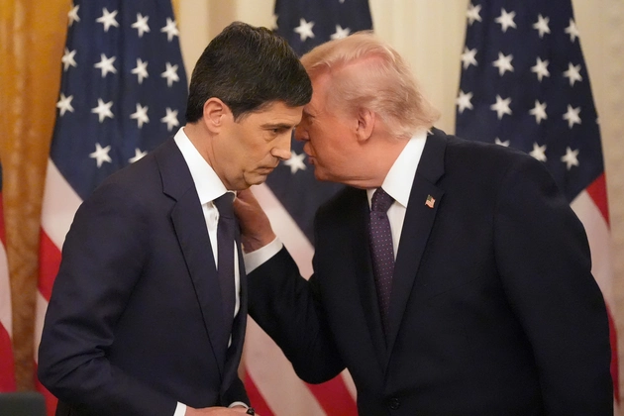
Historically, the Administration’s influence and involvement on the Fed’s decisions and policies have been closely watched and assessed to ensure the two remain distinct, mainly to keep monetary policy insulated from short-term political incentives. Analysts have been quick to raise their concerns while noting that a vice president publicly instructing or pressuring the Fed towards “proper and responsible” action while also contradicting the very chairs the administration themselves appointed, could possibly be assessed as the independence between the two fading away instead of holding steady, a worrying concern for the US economy.
Furthermore, this concern is also being shaped by the legal battle that runs parallelly to these conditions in order to remove Fed Governor Lisa Cook, a move that critics argue is a more direct approach in reshaping and outlining the Fed perspective and actions instead of aiming to publicly influence the decisions and outcomes of the Fed.
What Happens at the September Meeting
The Federal Open Market Committee is set to convene a meeting on September 15-16, and until then, the market analysts and investors remain fairly split on whether a rate hike is expected or whether the rates would continue to maintain on current levels. Usually heading into such meetings, the markets have a fair estimation on the direction the outcome could result in but this time, the struggle between the Fed chair signalling one direction and the Fed’s own governors publicly disagreeing with each other within a two-week window has truly left the markets confused about the possible outcome from this scenario.
Conclusion
Market movements and Federate rate changes are commonly found at the top of the headlines, but this one in particular isn’t driven by its importance to the financial and economical spaces, but rather for the public tug-of-war about the leading influence over monetary policy of the American nation. And with the Vice President iterating about their position being “proper and responsible” and the Fed Chair warning persistent inflation as a
greater risk, there truly has never been a sharper divide within the factions of the same government. While the Fed is bound to move in some direction after its meeting on September 16, the outcome is already confirmed to undergo scrutiny for either being influenced by political pressure or for raising concerns over the sanctity and safety of the American economy.
Latest Posts