

Athletes Assemble in Ahmedabad for the International BRICS Traditional and Indigenous Demonstration Games
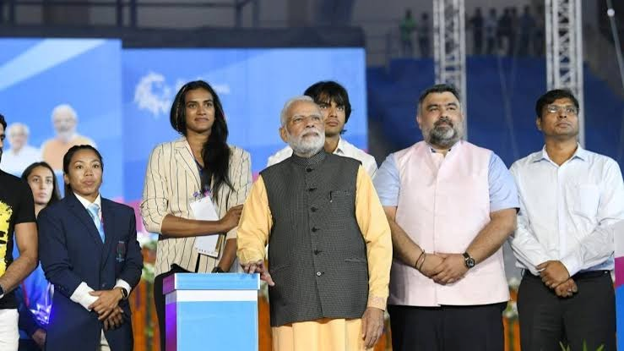
Delegations from 11 BRICS member and partner countries are bringing their own indigenous sporting traditions, from Belarusian Gorodki to Chinese Wushu, for what's explicitly designed as a non-competitive, culture-first event rather than a medal-driven tournament. India itself is showcasing Mallakhamb, Yogasana, and Kalaripayattu.
What This Event Actually Is, and Isn't
It's worth being precise about the format, since "Games" can suggest something it isn't. This is explicitly a demonstration event, not a competition. There are no medals, no rankings, no winners and losers in any conventional sporting sense. Instead, the Games are built around demonstration, documentation, and the exchange of traditional sporting practices between participating nations, alongside cultural interaction between the practitioners who carry these traditions forward in their home countries. That distinction matters because it shapes the entire purpose of the gathering. Rather than athletes competing against each other, this is closer to a living cultural showcase, each delegation presenting their own indigenous or traditional sport as a form of heritage preservation and international exchange, with the broader goal of strengthening people-to-people ties across the BRICS bloc through something more tangible than diplomatic statements.
Where and When
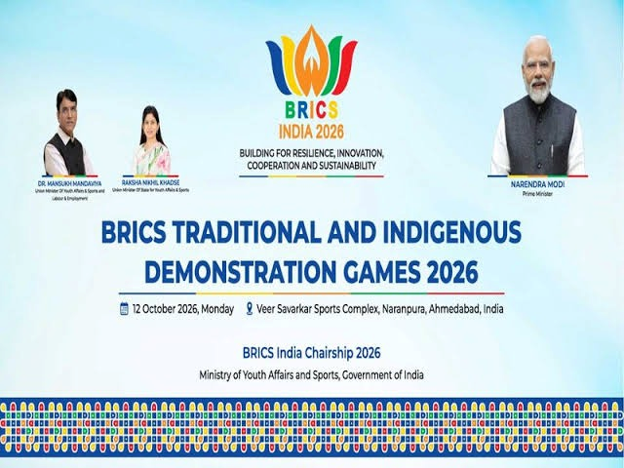
The Games take place on October 12, 2026, at the Veer Savarkar Sports Complex in Ahmedabad, Gujarat. The event is being jointly organized by India's Ministry of Youth Affairs and Sports and the Government of Gujarat, and it falls under India's current BRICS Chairship, the rotating leadership role within the BRICS bloc that gives the host country significant influence over that year's thematic priorities and events. This marks the first time an event specifically dedicated to traditional and indigenous sports has been organized under the BRICS framework, which is a meaningful first for a grouping more commonly associated with economic and geopolitical cooperation than cultural sporting exchange.
The Sports Each Country Is Bringing
Part of what makes this event genuinely interesting is the sheer variety of traditions on display, each specific to the country presenting it. Belarus is showcasing Gorodki, a traditional skittles-style game involving throwing bats to knock over wooden figures. China is bringing Wushu, Lion Dance, and Health Qigong, spanning martial arts, cultural performance, and a mind-body wellness practice all at once. South Africa is presenting Kgati and Iintonga, indigenous games rooted in its own regional traditions, while the United Arab Emirates is showcasing Al Tabbah.
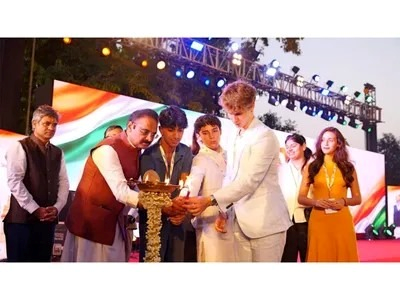
India, as host nation, is presenting three of its own traditional disciplines: Mallakhamb, acrobatics and gymnastics performed on a pole or suspended rope; Yogasana, the competitive performance of yoga postures; and Kalaripayattu, one of the oldest martial art forms in the world, rooted in the southern Indian state of Kerala. Altogether, delegations from 11 BRICS member and partner countries are expected to participate, each bringing a practice that reflects their own community's heritage, techniques, and cultural rituals.
Why This Matters Beyond the Spectacle
There's a genuine cultural preservation angle underneath this event that's easy to miss if you only look at the headline. Many traditional and indigenous sports exist in something close to intangible cultural heritage territory, living practices, skills, and knowledge transmitted between generations, often without the institutional backing or global visibility mainstream Olympic sports enjoy. A platform like this gives those practices an international stage and a degree of formal recognition they might not otherwise receive, especially for traditions practiced by smaller or more localized communities within much larger nations. The diplomatic layer matters too. Alongside the demonstrations, the event includes bilateral meetings with visiting delegations on the sidelines, aimed at exploring deeper cooperation in sports more broadly and specifically around promoting traditional and indigenous games within the BRICS framework going forward. That suggests this isn't intended as a one-off showcase but potentially the start of a more sustained BRICS-level conversation around sports heritage and cultural exchange.
Why India Is Positioned to Lead This
India's choice to host this particular event isn't incidental. The country has a genuinely deep, documented history of indigenous sporting traditions, Mallakhamb and Kalaripayattu both date back centuries, and has been actively working to raise the international profile of these practices, including advocacy for formats like Yogasana to gain broader competitive recognition. Hosting the first-ever BRICS event of this kind lets India position itself as a natural anchor for this cultural conversation within the bloc, leveraging its current Chairship to spotlight an area where it has genuine historical depth to draw from. It's also a relatively low-friction way for a large, geopolitically significant alliance to demonstrate soft cooperation. Economic and strategic coordination among BRICS nations often comes with genuine friction; a cultural, non-competitive sports showcase offers a comparatively easy space for every country to contribute something distinctly their own without the event becoming a contest over resources or influence.
What to Watch For Going Forward
Since this is the first event of its kind, its long-term significance will likely depend on whether it becomes a recurring fixture within the BRICS calendar, the way other cultural and sporting exchanges have for other international blocs, or whether it remains a one-time showcase tied specifically to India's 2026 Chairship. The bilateral meetings planned alongside the Games are probably the most telling indicator here: formal cooperation agreements or stated commitments coming out of those sideline discussions would suggest genuine institutional follow-through, while a quieter diplomatic exchange would suggest the event was more symbolic than structural.
FAQs
1. Is the BRICS Traditional and Indigenous Demonstration Games a competitive event?
No. It's explicitly designed as a non-competitive demonstration event focused on showcasing, documenting, and exchanging traditional sporting practices, rather than determining winners through competition.
2. Which sports is India showcasing?
India is presenting Mallakhamb (pole and rope acrobatics), Yogasana (competitive yoga postures), and Kalaripayattu, one of the world's oldest martial art forms, originating in Kerala.
3. How many countries are participating?
Delegations from 11 BRICS member and partner countries are taking part, each showcasing a sport or cultural practice specific to their own nation.
4. Where is the event being held?
The Games are taking place at the Veer Savarkar Sports Complex in Ahmedabad, Gujarat, on October 12, 2026
Latest Posts